Why Tarragona, Spain Should Be Your Next Trip
Picture yourself walking along an ancient Roman wall, the old stone worn smooth by centuries of footsteps. Below you, the Mediterranean stretches out in shades of blue, calm and bright in the afternoon sun. In Tarragona, scenes like this don’t feel unusual. They are simply part of the city.
Tarragona, Spain may not get the same attention as Barcelona, Seville, or Granada, but it offers a combination that is hard to find elsewhere: Roman history, Mediterranean beaches, Catalan food, and a slower pace of life.
Many travelers visit Tarragona for a few hours while staying in Barcelona or heading farther south along the coast. But Tarragona deserves more than a quick stop between destinations.
So, is Tarragona worth adding properly to your Spain trip? Yes. From its Roman ruins and Old Town to its beaches, viewpoints, food, and relaxed atmosphere, there is plenty here to fill a day or two without making the visit feel rushed.
Why Tarragona Is Worth Visiting
You Can Walk Through More Than 2,000 Years of History
Tarragona was once Tarraco, one of the most important Roman cities in Hispania. Today, its ancient past is still woven into everyday life.
Roman walls sit beside modern buildings. Archaeological remains appear beneath streets and squares. Ancient structures stand surprisingly close to cafés, shops, and homes.
The historic district, known as Part Alta, was built over much of the old Roman city. As you walk through its narrow streets, you’re not simply looking at history from behind glass. You’re walking through it.
That is one of the things that makes Tarragona special.
The Mediterranean Is Always Close
Wherever you are in Tarragona, the sea never feels far away.
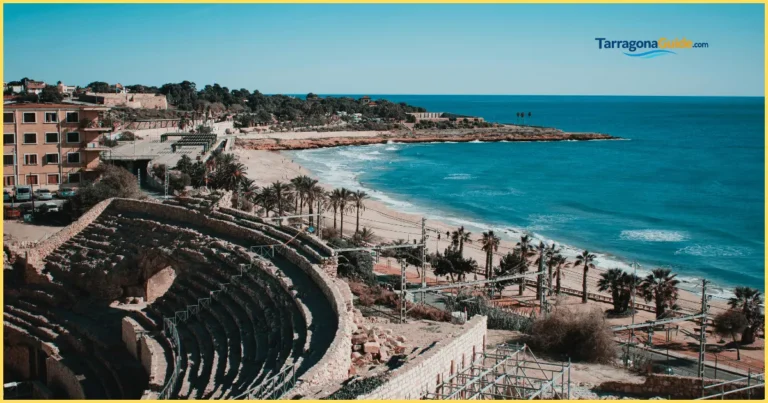
At the end of Rambla Nova, the Balcó del Mediterrani opens onto a wide view of the Mediterranean, with the coast stretching away in both directions. From there, you can also see the Roman Amphitheatre below.
And you don’t have to travel far to reach the beach. Several beaches are close to the city centre, making it possible to spend the morning exploring ancient ruins and the afternoon beside the sea.
It’s a simple combination, but a memorable one: Roman history on one side, Mediterranean water on the other.
Tarragona Feels More Relaxed Than Barcelona
Barcelona is exciting, busy, and full of things to see. Tarragona offers something different.
The city is smaller and easier to explore on foot, with a more relaxed rhythm that makes it easier to slow down and enjoy your surroundings. You can wander through the Old Town, stop for coffee, have a long lunch, and still feel like you have time left in the day.
And convenience isn’t a problem. Tarragona is only around an hour from Barcelona by train, depending on the service, so you can enjoy a quieter base without feeling cut off from the bigger city.
It’s More Than a Roman History Destination
Tarragona is famous for its Roman heritage, but history is only part of the story.
There is a living city here, with cafés, restaurants, markets, beaches, local celebrations, and streets that become especially lively in the evening.
Catalan culture is part of everyday life, from the food and language to the relaxed rhythm of meals and evenings.
If you only visit the Roman monuments, you’ll see an important part of Tarragona. If you stay a little longer and experience the city itself, you’ll understand much more of what makes it worth visiting.
What Makes Tarragona Different From Other Spanish Cities?
History and the Sea in the Same City
One of Tarragona’s biggest advantages is its unusual setting.
The archaeological remains of ancient Tarraco, a UNESCO World Heritage Site, are spread through the modern city, while the Mediterranean coastline begins just a short walk away.
You can spend the morning exploring a Roman amphitheatre and ancient streets, then be beside the water later in the day.
Few destinations make that transition so easy.
A Walkable City With Big Attractions
Tarragona is relatively easy to explore on foot.
Many of the main sights are connected around the historic centre, so you can move from the Roman Amphitheatre to the Roman Circus, Cathedral, Old Town, and waterfront without constantly relying on public transport.
The city does have hills, steps, and some uneven streets, so comfortable shoes are a good idea. But overall, walking is one of the best ways to experience Tarragona.
You see more that way a quiet square, an old doorway, a small café, or a glimpse of the sea between buildings.
A Good Base for Exploring Southern Catalonia
Tarragona can also work as a base for exploring the wider Costa Daurada.
You can take trips to Reus, Salou, Cambrils, and other coastal towns without having to change hotels every night. Barcelona is also close enough for a longer day trip if you want to experience the bigger city.
That makes Tarragona useful not only as a destination itself, but also as a comfortable starting point for discovering southern Catalonia.
The Best Things to Do in Tarragona
Explore the Roman Amphitheatre
The Roman Amphitheatre is Tarragona’s most recognizable ancient monument, and its setting makes it especially impressive.
Built during the Roman period, the amphitheatre once hosted public spectacles and could hold thousands of spectators. Today, its remains sit above the Mediterranean, creating a striking meeting point between ancient history and the sea.
Try to visit earlier in the day when temperatures are more comfortable, and the site is usually quieter.
Take your time here. Look at the stone seats, the remains of the arena, and the coastline beyond. It is one of those places where the setting is almost as memorable as the ruins themselves.
Walk Along the Ancient Roman Walls
The Passeig Arqueològic follows part of Tarragona’s ancient Roman and medieval walls.
It’s an easy way to experience the city’s history without spending hours inside a museum. As you walk along the old stone walls, you can also enjoy views across parts of Tarragona.
It is often calmer than the city’s headline attractions, making it a good place to slow down for a while.
Visit the Roman Circus and Praetorium
The Roman Circus gives you another glimpse into the scale of ancient Tarraco.
This was once a huge venue for chariot races, and parts of the original structure remain beneath the modern city. Some of the surviving vaulted passages can still be explored today.
Next to it stands the Praetorium, the old Roman tower often associated with the name Torre de Pilat. Climbing up gives you a different perspective over Tarragona, the port, and the surrounding area.
Together, the Circus and Praetorium help you understand how large and important Tarraco once was.
Step Inside Tarragona Cathedral
High above the Old Town, Tarragona Cathedral brings together Romanesque and Gothic architecture.
Construction took place over a long period, which explains the mixture of architectural styles you can see today. Inside, the atmosphere is quieter than many of the city’s outdoor attractions.
Don’t rush through the cathedral. Give yourself time to look at the details, then step into the cloister for a more peaceful moment.
Outside, Plaça de la Catedral and the surrounding streets are perfect for wandering. This is one of the parts of Tarragona where getting slightly lost can be part of the experience.
Stop at the Balcó del Mediterrani
At the end of Rambla Nova, the Balcó del Mediterrani opens toward the Mediterranean.
From the viewpoint, you can look across the sea, down toward the Roman Amphitheatre, and along the coastline. It is one of the simplest places in Tarragona to stop, breathe, and take in the setting.
If you have time, return around sunset. The afternoon light gradually softens, the sea changes colour, and the city takes on a quieter feel.
Wander Through Tarragona’s Old Town
Some of the best moments in Tarragona don’t come from ticking attractions off a list.
They come from walking.
The Old Town, or Part Alta, is filled with narrow streets, small squares, cafés, local shops, and old stone buildings. Give yourself twenty or thirty minutes with no particular destination and simply see where the streets lead.
Stop for a coffee. Sit in a small square. Take a photograph when the light catches an old doorway.
The atmosphere changes again after dark. The streets become quieter, restaurants begin filling up, and the old buildings take on a warmer, more atmospheric character.
Sometimes, the best way to experience Tarragona is simply to slow down and let the city come to you.
Tarragona’s Beaches: Where History Meets the Mediterranean
Platja del Miracle
Platja del Miracle is the closest beach to Tarragona’s city centre, sitting just below the Roman Amphitheatre.
It may not be the most beautiful beach on the Costa Daurada, but its location is hard to beat. You can walk down from the Old Town without needing a bus, taxi, or car. After a morning exploring Roman ruins, it’s an easy place to stop, take off your shoes, and spend some time beside the Mediterranean.
Arrabassada Beach
A little farther from the centre, Arrabassada Beach is wider and better suited to spending a few relaxed hours by the water.
If you want more than a quick swim between sightseeing stops, this is a good option. Bring your towel, find a comfortable spot, and let the afternoon slow down.
Savinosa Beach
Savinosa Beach has a quieter and more natural feel.
It’s a good choice if you want to escape the busier parts of the city without actually leaving Tarragona. The atmosphere is more peaceful, making it a nice place to spend a few hours away from the streets and sightseeing crowds.
Should You Stay in Tarragona for the Beaches?
If the beach is the main reason you’re travelling, Salou or Cambrils may suit you better. Both places have a stronger beach-holiday feel and are built more around life by the sea.
Tarragona is different.
Here, the beaches are part of a bigger experience. You can explore Roman ruins in the morning, eat Catalan food for lunch, wander through the Old Town, and still have the Mediterranean waiting nearby in the afternoon.
If you want a city trip with some beach time rather than a beach holiday with a city attached, Tarragona fits nicely.
How Many Days Do You Need in Tarragona?
Tarragona in One Day
One day is enough to see the main highlights.
Start with the Roman sites in the morning, then explore the Old Town and Cathedral, stop for lunch, walk along Rambla Nova to the Balcó del Mediterrani, and leave some time for the beach before dinner.
It’s a full day, but the compact layout of the city makes it manageable.
Two Days in Tarragona
Two days give you something valuable: time.
You can spend longer at the archaeological sites, enjoy a proper lunch without checking the clock, relax at the beach, and wander through the Old Town without feeling like you’re constantly moving toward the next attraction.
This is a good option if you prefer travelling slowly rather than trying to see everything in one day.
Three Days or More
With three days or longer, Tarragona becomes a useful base for exploring southern Catalonia.
You can take day trips to Reus, Cambrils, Salou, and other destinations around the Costa Daurada, then return to the same hotel each evening.
It gives the trip a more relaxed rhythm. Instead of packing and unpacking every morning, you have one place to come back to.
The Perfect Tarragona Itinerary for First-Time Visitors
Morning
Start early at the Roman Amphitheatre, when the atmosphere is usually quieter and the temperatures are more comfortable.
From there, continue to the Roman Circus, the Praetorium, and part of the Passeig Arqueològic.
The sites are close enough to connect on foot, so you can see a lot in a couple of hours without spending the morning rushing from one side of the city to another.
Take a moment to look around rather than simply checking each attraction off your list. The old stones, the sea, and the modern city surrounding them are all part of the experience.
Lunch
By lunchtime, it’s time to slow down.
Tarragona’s food reflects its Mediterranean setting, with fresh seafood, rice dishes, seasonal produce, and local wines appearing on menus across the city.
If your timing works, visit the central market or stop for a vermouth before lunch. Vermouth is part of the local social tradition, especially before a meal, and it’s a simple way to experience the city like a local.
Then sit down and enjoy lunch properly. You don’t need to rush through it just to reach the next attraction.
Afternoon
After lunch, explore Tarragona Cathedral and spend some time wandering through the narrow streets of the Old Town.
Stop at Plaça de la Font, explore the smaller streets around Part Alta, and see where the afternoon takes you.
Later, make your way along Rambla Nova toward the Balcó del Mediterrani.
This is where Tarragona’s two sides come together — the old city behind you and the Mediterranean stretching out in front.
Evening
If the weather is good, spend some time near the beach or walk along the waterfront before dinner.
Later, choose a restaurant in the Old Town or close to the sea and enjoy a relaxed meal.
And don’t feel that you have to keep moving.
Sit down in a square. Order a coffee. Watch people pass by. Let the streets become quieter as the evening continues.
Tarragona is easier to enjoy when you stop trying to fit everything into the day.
How to Get to Tarragona
Getting to Tarragona From Barcelona
Tarragona is easy to reach from Barcelona Sants, with regional and faster train services available depending on the schedule.
Regional services generally take a little over an hour, while faster trains can make the journey shorter.
That makes Tarragona a convenient choice for either a day trip or an overnight stay. Before travelling, check the current timetable, particularly if you are planning to return to Barcelona the same evening.
Getting to Tarragona From Madrid
High-speed trains connect Madrid with Camp de Tarragona, which is outside the city centre.
This is an important detail to remember when planning your journey. Once you arrive at Camp de Tarragona, you’ll need to continue into the city by taxi, bus, or another transfer.
So don’t plan your arrival as if the train will take you directly into the Old Town.
Getting to Tarragona From Reus Airport
Reus Airport is close to Tarragona and serves several European routes, particularly during the busier travel seasons.
From the airport, you can continue to Tarragona by bus or taxi. The journey is relatively short, making Reus Airport a practical option if you’re flying into the area.
Getting Around Tarragona
For most visitors, walking is the best way to explore Tarragona.
The Old Town, Roman ruins, Rambla Nova, and the nearest beach are all within easy reach of one another. Instead of spending your day waiting for buses, you can simply walk from one place to the next, taking in the old streets, small squares, and glimpses of the Mediterranean along the way.
Local buses are useful if you’re staying outside the city centre or want to reach beaches farther along the coast. They can save you some walking when the sun is strong or when you’re carrying beach gear.
Taxis are most useful when you have luggage or need to get to and from the train station. Within the historic centre, however, walking is usually the easier choice and often the more enjoyable one.
Tarragona is the kind of city that rewards walking. Give yourself time between the sights, take the longer street when you can, and don’t be afraid to wander without a destination. Sometimes the best part of the journey is simply seeing where the next old stone street leads.
Where to Stay in Tarragona
Stay in the Old Town
The Old Town is a good choice if you want history, character, restaurants, and atmospheric evening walks right outside your door.
You’ll be close to many of the city’s main sights, and the narrow streets and old buildings give the area a strong sense of place.
The trade-off is that some streets are narrow, and older buildings may not offer the same convenience as modern hotels. For many travellers, though, that’s part of the charm.
Stay Near the City Centre
The city centre offers a useful middle ground.
You’ll be close to restaurants, shops, transport, and the main attractions while still being within walking distance of the Old Town and waterfront.
For first-time visitors or short stays, this can be a particularly practical option. You get convenience without giving up the feeling of being in Tarragona.
And when evening comes, you’re never far from somewhere to sit down, order a drink, and watch the city move at its own pace.
Stay Near the Beach
Makes sense for summer trips or if relaxing by the sea matters as much to you as the sightseeing. You’ll trade a bit of proximity to the Roman sites for easier beach access.
How Many Nights Should You Book?
One night is enough for the highlights if your schedule’s tight. Two nights let you actually relax into the trip rather than racing the clock. Three or more make sense if you want to use Tarragona as a base for day trips around the region.
What to Eat in Tarragona
Try Local Catalan Cuisine
Food in Tarragona is part of the experience, not simply something to eat between attractions.
The cooking is closely tied to the Mediterranean, with plenty of olive oil, fresh vegetables, seafood, seasonal ingredients, and simple flavours. You don’t need to look for anything overly complicated. Often, the best dishes are the ones that let good ingredients speak for themselves.
Take your time over lunch, order something local, and let the meal become part of the day rather than another item on your sightseeing list.
Seafood and Mediterranean Flavors
With the Mediterranean just beyond the city, seafood naturally plays an important role in Tarragona’s food scene.
Look for fresh fish, seafood, rice dishes such as arròs a banda, and other traditional coastal Catalan dishes. If you see fideuà on the menu, it is also worth trying. Made with short noodles instead of rice and usually cooked with seafood, it is a classic Mediterranean dish with plenty of flavour.
A long lunch with good food and a glass of local wine can sometimes be one of the best memories of a Tarragona trip.
Don’t Skip the Local Vermouth Tradition
Tarragona also has a strong vermouth tradition.
Having a vermouth before lunch, often with a small snack or something simple to nibble on, is a relaxed way to experience local life. It isn’t about rushing through a drink before the next attraction. It’s about sitting down, talking, watching the street, and enjoying a small pause in the day.
Where to Eat
The Old Town is a good place to look for restaurants with a more traditional atmosphere. Its narrow streets and small squares make an enjoyable setting for a relaxed meal.
Around the city centre, you’ll find a wider mix of restaurants, from casual places for a quick bite to more polished dining options.
The area around the market is also worth exploring if you want to find local food away from the busiest tourist streets. And along the waterfront, seafood restaurants offer another appealing combination: Mediterranean flavours with the sea close by.
Wherever you choose to eat, don’t make the meal an afterthought. In Tarragona, food is part of the rhythm of the city best enjoyed slowly, with nowhere else you need to be for a while.
When Is the Best Time to Visit Tarragona?
Spring
Comfortable temperatures and quieter streets make spring a strong choice for sightseeing heavy trips.
Summer
Warmer, busier, and better for beach time, with more going on in the evenings, but also the most crowded season by a fair margin.
Autumn
Similar appeal to spring, with the added bonus of a still-warm sea in the earlier part of the season.
Winter
The quietest time to visit, with mild weather by broader European standards, though some outdoor sites may run shorter hours.
The Best Months for Different Types of Travelers
| Traveler | Good Period |
|---|---|
| Beach lovers | Summer |
| Sightseeing | Spring / autumn |
| Fewer crowds | Autumn / winter |
| Outdoor walking | Spring / autumn |
| Festivals | Check the annual local calendar |
How Much Does a Trip to Tarragona Cost?
Prices shift over time, so treat the following as general guidance rather than fixed numbers.
Accommodation
Budget options exist throughout the city, with mid-range hotels covering most of the Old Town and center, and a smaller number of higher-end stays closer to the beach or with sea views.
Food
Budget meals and market food can keep costs low, casual restaurants sit in a reasonable mid-range, and a special sit-down dinner with seafood will cost more but is usually worth it at least once during your stay.
Attractions and Activities
Walking through the Old Town and along the waterfront costs nothing. The Roman sites and museums generally charge admission, often with combined tickets available if you’re visiting several.
Transport
Factor in your train or flight to get there, plus small local costs for buses or taxis once you’re in the city none of it tends to be expensive by comparison to bigger Spanish cities.
Is Tarragona Good for Families?
Yes, Tarragona can be a very good choice for a family trip.
The beaches are easy to reach, many of the main sights are close together, and there are plenty of open spaces where children can stretch their legs after a morning of sightseeing. You can also take easy trips to nearby towns if you want to add a little variety to the holiday.
The main thing is not to overdo the Roman history in one go. Kids may enjoy exploring ancient ruins, but even the most enthusiastic little traveler needs a break eventually. Mix sightseeing with beach time, ice cream stops, parks, or a relaxed lunch.
A little downtime can make the whole day more enjoyable for everyone.
Is Tarragona Good for Couples?
Tarragona also works beautifully for couples, especially if you enjoy slower travel.
Watch the sunset from the Balcó del Mediterrani, wander through the narrow streets of the Old Town, sit down for a long Mediterranean dinner, and finish the evening with a walk beside the sea.
There is nothing overly complicated about it. Tarragona simply gives you the space to enjoy the day together without constantly rushing toward the next attraction.
It’s romantic in a quiet, natural way old stone streets, warm evening light, good food, and the Mediterranean nearby.
Tarragona for Solo Travelers
Tarragona is well suited to solo travellers because it is compact, walkable, and relatively easy to explore at your own pace.
You can spend the morning visiting Roman sites, stop at a café whenever you feel like it, wander through the Old Town, and change your plans without having to coordinate with anyone else.
Cafés and restaurants are generally comfortable places to sit alone, while nearby destinations can also be reached for simple day trips if you want to explore beyond the city.
As with any destination, keep an eye on your belongings in busy areas and follow normal travel precautions. Otherwise, Tarragona lends itself nicely to independent travel.
Sometimes travelling alone is about having nowhere else to be, and Tarragona gives you plenty of room for exactly that.
The Best Day Trips From Tarragona
Reus
Known for its modernist architecture, including Casa Navàs, and a genuine connection to Gaudí, who was born nearby, a good pick if you’re into architecture beyond the Roman stuff.
Salou
A proper beach town with a lively promenade (Passeig Jaume I) and easy access to PortAventura World if theme parks are on your list.
Cambrils
A relaxed marina town known for its seafood and coastal atmosphere a nice, quieter alternative to Salou if you want beach time without quite as much energy.
Barcelona
Worth a day trip if you want a taste of the bigger city without basing your whole trip there, though it makes more sense as an occasional add-on than something you go back and forth to repeatedly.
Practical Tarragona Travel Tips You Should Know
Wear Comfortable Shoes
The Old Town’s cobblestones and the archaeological sites both involve a fair amount of walking on uneven ground.
Don’t Try to See Everything in One Morning
Leave room for food, coffee, beach time, and wandering without a plan Tarragona rewards a slower pace more than a packed schedule.
Check Opening Times Before Visiting Roman Sites
Hours shift with the season, so it’s worth a quick check before you head out rather than assuming.
Book Ahead During Busy Periods
Especially around major holidays or local events, when both accommodation and popular restaurants fill up faster than you’d expect.
Carry Water in Summer
The Mediterranean heat makes walking more tiring than it looks on paper, particularly on the Old Town’s uphill stretches.
Learn a Few Simple Catalan or Spanish Phrases
It’s a small effort that tends to go a long way with locals, even just a basic greeting or “gràcies.”
Common Mistakes First-Time Visitors Make in Tarragona
Tarragona is easy to enjoy, but a few common mistakes can make a short visit feel rushed.
- Treating Tarragona as only a Roman history stop. The Roman ruins are impressive, but they are only part of the city. Give yourself time for the Old Town, food, and waterfront.
- Spending the whole day indoors. Tarragona’s history is important, but don’t forget that the Mediterranean is right outside.
- Skipping the beach. Even if you’re mainly interested in history, spending an hour by the sea can completely change the rhythm of your day.
- Trying to visit too many nearby towns. Salou, Cambrils, Reus, and other places are worth exploring, but trying to fit several into one day can leave you seeing everything and enjoying nothing.
- Not checking transport times. If you’re travelling by train or bus, check your connections before you go, especially if you’re planning a day trip.
- Visiting only the Amphitheatre. Make time for the Roman Circus and Praetorium too. Together, they give you a much better picture of ancient Tarraco.
- Going straight back to your hotel after dinner. Tarragona’s Old Town has a different atmosphere after dark. Take a slow walk through Part Alta before calling it a night.
Is Tarragona Worth Adding to Your Spain Itinerary?
The answer depends on the kind of trip you want.
Tarragona is a particularly good fit if you want ancient history without spending your entire trip inside museums, Mediterranean beaches close to the city centre, Catalan food and culture, and a destination that is easy to explore on foot.
It also makes a useful base for discovering more of the Costa Daurada, with places such as Reus, Salou, and Cambrils within easy reach.
If you’re looking for huge nightlife districts, constant energy, and the scale of a major European city, Tarragona may feel too quiet. Barcelona and Madrid offer a very different experience.
But if you prefer a slower trip one with time for long lunches, old streets, sea views, and evenings that don’t need to be planned from beginning to end Tarragona has plenty to offer.
A Simple Tarragona Trip Planning Checklist
Before you leave home, a little preparation can make the trip much smoother:
- Choose your travel dates.
- Book your accommodation, especially during the busier months.
- Check train connections in both directions if you’re taking a day trip.
- Decide which Roman sites you most want to see.
- Check opening times for attractions before you arrive.
- Leave some time for the beach or waterfront.
- Look for local festivals or events happening during your visit.
- Reserve a restaurant in advance if you have a particular place you want to try.
- Most importantly, leave some empty space in your schedule. Tarragona is a city worth wandering through without always having somewhere else to be.
Roman stones beneath your feet. The Mediterranean stretching out beyond the old city walls. A plate of Catalan food on the table and the sound of conversation drifting through a nearby square.
That is Tarragona.
It is easy to visit for a few hours, photograph the Amphitheatre, and move on. But the city reveals more when you stay a little longer.
Sit down for a coffee in the Old Town. Walk along Rambla Nova. Watch the light change over the Balcó del Mediterrani. Take your time over lunch. Let the evening unfold instead of checking the clock every few minutes.
Tarragona doesn’t need to compete with Barcelona or Madrid. It offers something quieter: a chance to step into Spain’s ancient past while still enjoying the simple pleasures of Mediterranean life.
So, if you’re planning a Spain trip, don’t treat Tarragona as just a quick stop between destinations. Give it a proper place on your itinerary.
You may arrive for the Roman ruins, but it might be the sea, the food, the old streets, or simply the slower pace that makes you want to stay a little longer.